Samsa brothers
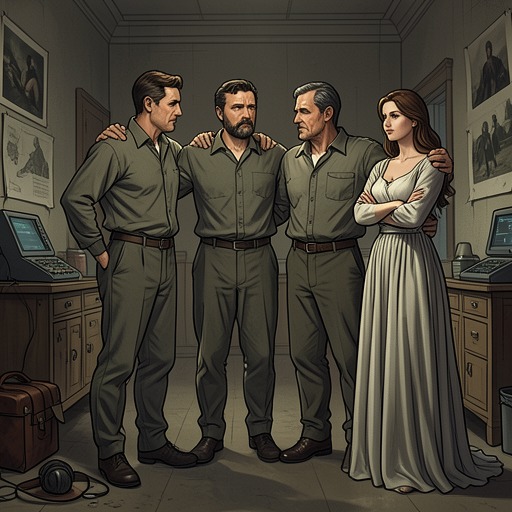
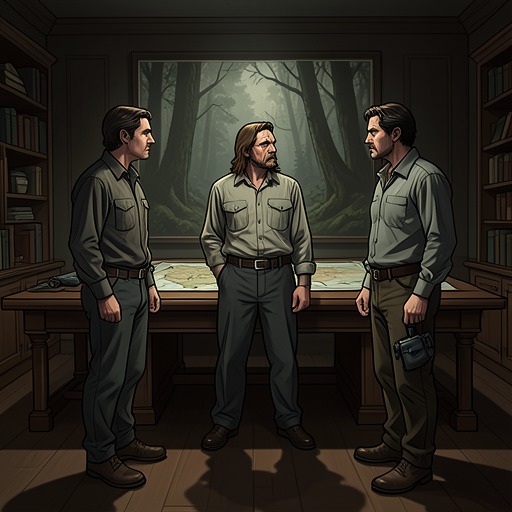
Insatiable Box Set: Books 1-4The Samsa brothers—Wilder, Drayton, and Lycell—are an inseparable triplet of Alpha werewolves whose family pact turns brotherhood into the governing structure of their clan. Controlling territory across Nevada, Oregon, Washington, and Wyoming, as well as a smaller pack in Alaska, they treat the choice of a mate not as an individual romance but as a decision affecting reproduction, succession, wealth, secrecy, and political stability. Their shared commitment to Adrienne Ward therefore becomes the story’s central experiment in whether a human-werewolf household can preserve both family unity and a dwindling werewolf population.
Identity and Family Structure
The brothers are the triplet sons of a werewolf father and a human mother, and their childhood remains a formative model for the family they hope to reproduce. Wilder is the firstborn and head Alpha; Drayton is the younger, calmer brother; and Lycell is the least restrained and most difficult to manage. Their unity is not merely sentimental. They inherited their father’s large territory equally, refuse to destroy or displace one another, and have sworn to remain together rather than allow succession to fracture the clan.
That pact also governs marriage and inheritance. Wilder’s brothers agree to accept and mate with any female he selects because they trust his judgment as head Alpha. If Wilder dies, the next brother in line is expected to take the woman and marry her, preserving both the mate relationship and the continuity of the clan. The arrangement makes the brothers simultaneously siblings, co-rulers, prospective husbands, and potential successors, with personal loyalty functioning as a political institution.
Territory, Wealth, and Hidden Governance
The Samsa brothers’ authority extends across several western states and into Alaska, giving them a broad network of packs to police and protect. Wilder’s travels through Oregon and other western territories are connected to the practical work of maintaining survival skills, hearing the grievances of other packs, and replenishing food supplies. Their ranch and cave life exists alongside a much larger territorial order in which the brothers exercise Alpha power.
Their influence also reaches the surrounding human population. The family uses its wealth to protect the area, support local businesses, and maintain full employment, while creating conditions in which humans can live without fear of forests being destroyed for lumber, oil, or other raw materials. The brothers’ inherited fortune is immense: their father was described as the wealthiest werewolf in the country, and the sons inherited billions of dollars. This money supports both their public influence and their private reproductive project, including gatherings designed to introduce human women to werewolf Alpha males.
The family’s human staff are part of this hidden system. The cook helped deliver the triplets and has served the household since their birth; she and her daughter are sworn to secrecy about the family’s werewolf identity. Their duties include preparing different meats for each brother and ignoring signs of transformation, such as large white wolves near the ranch. Food preferences distinguish the brothers even within their shared life: Drayton favors rabbit, Wilder prefers deer and dislikes the smell of rabbit, and Lycell eats almost anything. These domestic details make the ranch a place where human routine and animal appetite are deliberately held together.
Reproduction and the Choice of Adrienne Ward
The brothers’ dependence on a shared mate arises from a fertility crisis. Most werewolf females are sterile, and Wilder believes that a strong pack requires a fertile woman capable of bearing all three brothers’ pups. He refuses to capture human women because he fears that kidnapping would expose the clan and provoke a human campaign against them. Instead, the family organizes parties intended to entice human women into marriage with werewolves, using wealth, protection, and social opportunity as attractions.
Wilder waits for a woman he considers compatible before committing the brothers to the arrangement. When he finds Adrienne, the brothers treat her as the possible answer to the clan’s decline, but her pregnancy also makes her politically vulnerable. Other neighboring Alphas may try to harm her if they discover that she is pregnant, particularly because rival leaders are already dissatisfied with Wilder’s control over their packs. Adrienne’s body thus becomes the point where private desire, population recovery, territorial authority, and succession meet.
Wilder tells Adrienne that she may leave, but that she cannot take the child because the heir would be endangered if the Ari Kara clan learned of the pregnancy. The brothers’ stated rejection of human-female abduction therefore coexists with a system that places severe limits on a pregnant woman’s freedom. Their reproductive customs are presented as both a survival strategy and a source of coercion, making the shared-mate arrangement inseparable from the question of consent.
The Brothers’ Different Roles
Wilder’s authority rests on judgment, restraint, and territorial command. He would rather remain alone than choose the wrong mate, and Drayton and Lycell understand that his decision to mate with Adrienne means he believes the relationship could preserve the pack. As the firstborn Alpha, Wilder is expected to make the final choice, yet his authority is repeatedly tested by the brothers’ competing claims over Adrienne and by the human consequences of werewolf law.
Drayton serves as the family’s mediator. He recognizes that Adrienne needs the human institution of marriage and proposes allowing her to decide whom she would prefer to marry, even while Wilder insists that he is the Alpha and that Adrienne is his mate. Drayton’s diplomacy also extends to conflict beyond the household. When Wilder orders him to mate with Mena to prevent war with the Alaskan and Oregon packs, Drayton objects that he does not love her, but Wilder answers that the political survival of the werewolves matters more than love. The proposed union reveals how easily the brothers’ family structure expands into alliance-building and political marriage.
Lycell is more impulsive and emotionally exposed than his brothers. His jealousy becomes visible when he rides recklessly past Adrienne and Drayton, nearly causing an accident, and his difficulty with human women becomes a practical danger to the pack’s reproductive plan. Drayton warns him that trying too hard can unsettle Adrienne, while Lycell admits that he understands horses and dogs more easily than human females. Even so, he recognizes that he must change because the clan’s survival may depend on persuading one human woman to live with all three brothers.
Lycell’s loyalty becomes decisive when Adrienne is abducted. After finding a disordered bedroom, overturned lamps, an open window, and blood on the sheets, he identifies the blood as belonging to a werewolf rather than Adrienne and immediately transforms into a large brown wolf to search for her. His response shows the brothers’ animal capacities operating within their family obligations: scent, speed, and transformation become instruments of protection rather than merely signs of predation.
Marriage, Law, and Political Consequences
Adrienne eventually declares that she wants to marry Wilder, Lycell, and Drayton, explaining that Lycell changed her mind about sharing a life with all three brothers. Her decision converts the brothers’ reproductive arrangement into a formally recognized family structure, although it does not erase the tensions beneath it. Wilder claims priority as the Alpha and father of the first pups, while Lycell argues from his own pregnancy claim, and Drayton continues to press for a decision that acknowledges Adrienne’s wishes.
The family’s customs also collide with neighboring werewolf law. Ramsey, Mena’s father, accuses Wilder of dishonoring his daughter after Wilder returns her at Adrienne’s insistence and asks when the Samsa brothers began allowing a human woman to dictate werewolf laws. Wilder rejects the accusation and insists that Mena was not defiled, even though he claims he could have done what he wanted to her. The confrontation exposes the limits of the brothers’ supposed protection of women: their household resists Ramsey’s authority, but it still speaks in a legal vocabulary that treats female sexuality and marriage as matters controlled by Alpha men.
The same political logic leads Wilder to require Drayton’s marriage to Mena. Drayton does not love her, yet Wilder frames the union as necessary to prevent a war that the Samsa clan is not strong enough to fight. Later, Wilder approves the marriage between Mena and Robert, allowing it to proceed alongside Drayton and Adrienne’s marriage and welcoming Robert to remain as the family doctor. He also asks whether Robert can travel with Devin, showing that political negotiation is tied to practical care for children and vulnerable family members.
The Samsa brothers therefore embody a system in which kinship is never only private. Their fraternal pact protects the territory from internal division; their shared-mate plan addresses infertility; their wealth sustains secrecy and human coexistence; and their marriages are used to secure alliances. Yet every solution produces a new conflict over agency, succession, or law. The brothers’ strength lies in their unity, while the story’s pressure comes from the human woman whose presence forces that unity to justify itself.
Marriage, Law, and Political Consequences
Adrienne Ward eventually declares that she wants to marry Wilder, Lycell, and Drayton, explaining that Lycell changed her mind about sharing a life with all three brothers. Her decision converts the Samsa brothers’ reproductive arrangement into a formally recognized family structure, although it does not erase the tensions beneath it. Wilder claims priority as the Alpha and father of the first pups, while Lycell argues from his own pregnancy claim, and Drayton continues to press for a decision that acknowledges Adrienne Ward’s wishes.
The family’s customs also collide with neighboring werewolf law. Ramsey, Mena’s father, accuses Wilder of dishonoring his daughter after Wilder returns her at Adrienne Ward’s insistence and asks when the Samsa brothers began allowing a human woman to dictate werewolf laws. Wilder rejects the accusation and insists that Mena was not defiled, even though he claims he could have done what he wanted to her. The confrontation exposes the limits of the brothers’ supposed protection of women: their household resists Ramsey’s authority, but it still speaks in a legal vocabulary that treats female sexuality and marriage as matters controlled by Alpha men.
The same political logic leads Wilder to require Drayton’s marriage to Mena. Drayton does not love her, yet Wilder frames the union as necessary to prevent a war that the Samsa clan is not strong enough to fight against the Alaskan and Oregon packs. Later, Wilder approves the marriage between Mena and Robert, allowing it to proceed alongside Drayton and Adrienne Ward’s marriage and welcoming Robert to remain as the family doctor. He also asks whether Robert can travel with Devin, showing that political negotiation is tied to practical care for children and vulnerable family members.
The Samsa brothers therefore embody a system in which kinship is never only private. Their fraternal pact protects the territory from internal division; their shared-mate plan addresses infertility; their wealth sustains secrecy and human coexistence; and their marriages are used to secure alliances. Yet every solution produces a new conflict over agency, succession, or law. The brothers’ strength lies in their unity, while the story’s pressure comes from the human woman whose presence forces that unity to justify itself.